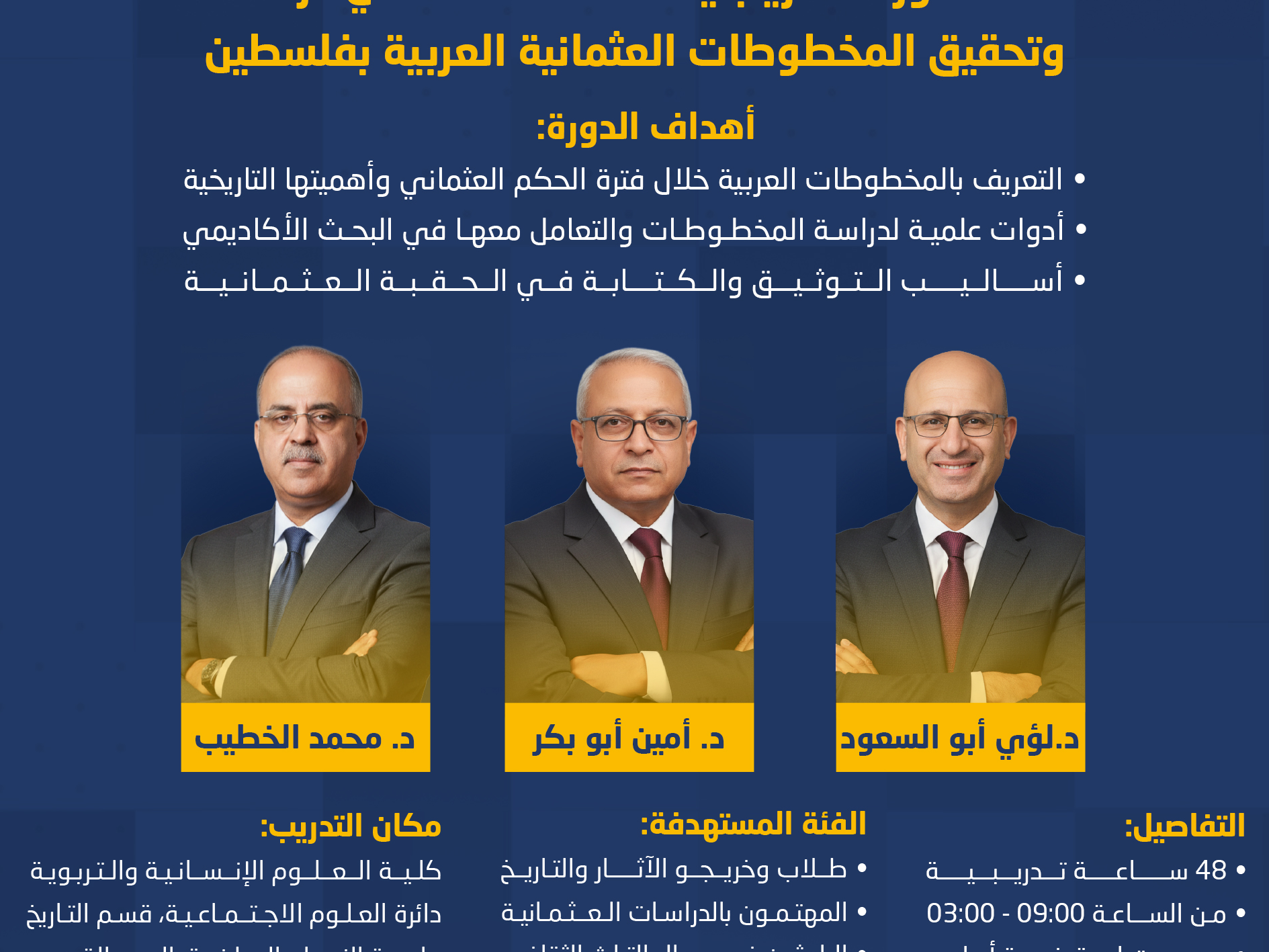
This course is dedicated to introducing students and researchers to the study of Ottoman-era Arabic manuscripts in Palestine, including their examination, critical editing, preservation, and cataloging.
The course covers scientific methods for reading manuscripts and analyzing their texts, in addition to identifying the various Ottoman scripts (such as Naskh, Ruq‘ah, Diwani, and Thuluth) and the copying and documentation practices of the Ottoman period. The course also focuses on the manuscript heritage of Palestine, presenting real examples from collections preserved in the libraries of Nablus, Jerusalem, Gaza, and Hebron, along with studying the physical and artistic characteristics of manuscripts such as paper, ink, binding, pagination, and ownership marks.
Participants are trained in the steps of scholarly text verification (taḥqīq), starting from collecting and comparing manuscript copies and ending with preparing the verified text for publication, with practical applications using religious, literary, and historical manuscripts from the Ottoman era.