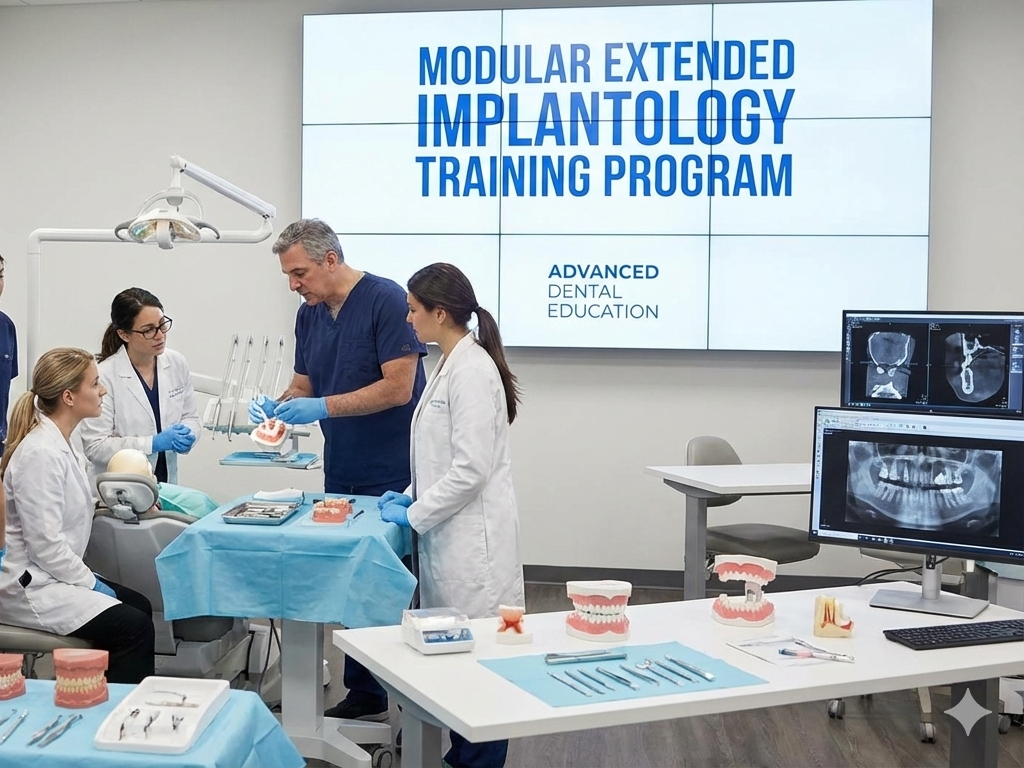
Lectures, practical workshops, live surgeries, case discussions, and assessments. Candidates must successfully pass an entrance examination prior to enrollment in the course. At the end of each module, participants are required to complete a module-based examination to assess their theoretical and practical competence.
Certification:
University-accredited certificate upon successful completion. Certificate from the Palestinian higher ministry of education. And certificate from the sponsoring company.
Content:
Anatomy & Diagnosis
- Importance of aesthetics in implant dentistry
- Key anatomical considerations in the aesthetic zone
- Clinical and radiographic assessment (CBCT, panoramic, periapical)
- Smile line, gingival architecture, and soft tissue evaluation
- Socket classification and case selection criteria
- Implant challenges in esthetic zone.
- Healing protocols and timing considerations
Surgical and Periodontal Considerations.
- Classic (Delayed) Implant Placement (Surgical steps and flap design)
- Immediate Implant Placement in the Esthetic Zone
- Indications, advantages, and limitations
- Atraumatic extraction techniques.
- Immediate placement vs. immediate loading concepts
- Hard and Soft Tissue Management
- Bone grafting and guided bone regeneration (GBR)
- Socket preservation techniques
- Soft tissue grafting and manipulation for optimal esthetics
- Exposure techniques, soft manipulation around implants and emergence profile creating.
Prosthetic Considerations
- Temporary restoration and shaping of emergence profile
- Abutment selection (stock vs. custom abutments)
- Cement retained vs screw retained Final prosthesis design for long
- Term esthetics and function in esthetic zone.
- Selecting and customizing abutment for cement retained prosthesis
- Screw retained prosthesis fabrication and work flow in esthetic zone.
- Complications and Risk Management
- Peri-implantitis and soft tissue recession management
- Esthetic failures and corrective strategies
Practical Component Sections:
- Hands-on models or animal jaws.
- Immediate implant placement simulations
- Soft tissue contouring practice
- Live patient surgeries under supervision (2 implants installation for every single candidate).