Description

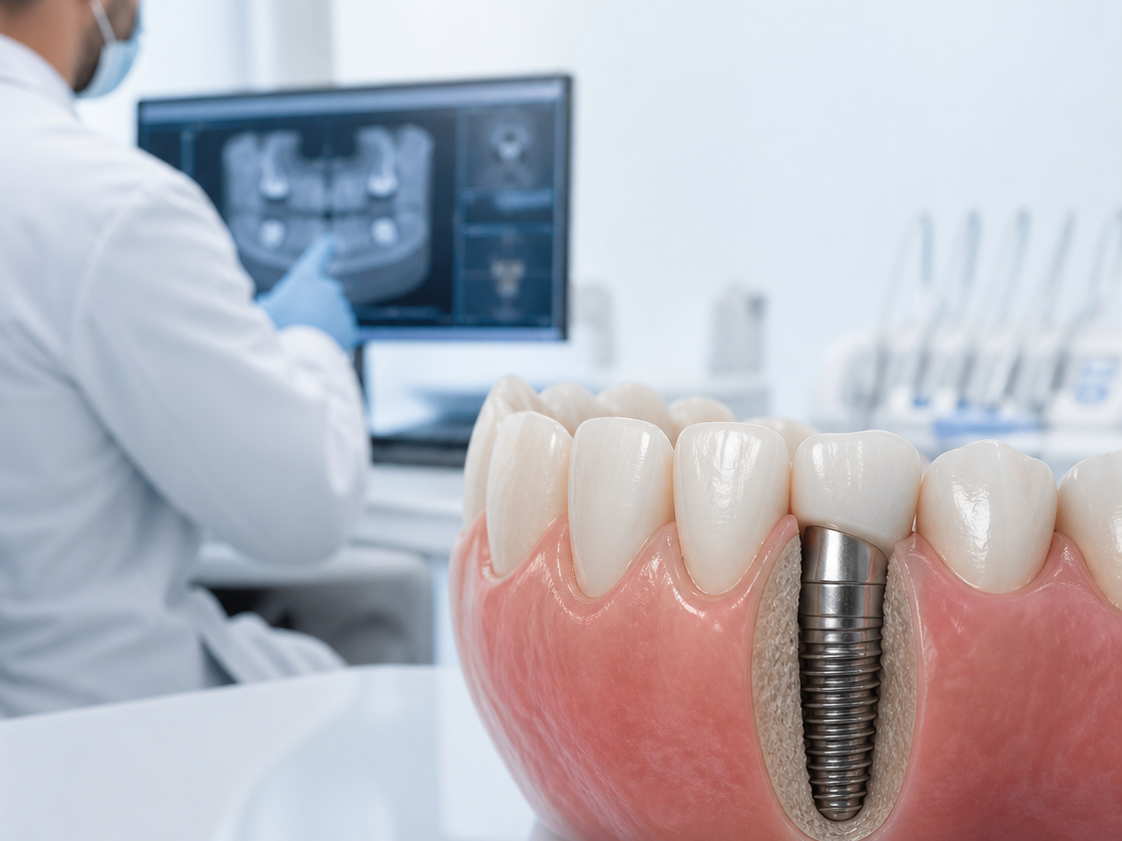
Foundations of Oral Implantology and Basic Implant Placement is an EQF Level 7 micro-credential designed for qualified dental professionals seeking to develop foundational competence in implant dentistry. The course introduces the biological, diagnostic, surgical, and prosthetic principles of oral implantology, including osseointegration, implant components, patient selection, radiographic interpretation, virtual planning, surgical asepsis, flap design, suturing, osteotomy preparation, basic implant placement, and introductory implant prosthetics.

Through lectures, case discussions, hands-on model training, and supervised clinical exposure, learners develop the ability to assess patient suitability, plan simple implant cases, identify implant systems and components, and perform basic implant placement procedures within a safe and professionally supervised environment. Successful completion provides evidence of assessed theoretical knowledge, practical skills, clinical reasoning, and professional readiness to progress within a stackable implantology pathway.

Knowledge

  • Understand the scientific foundations of dental practice and oral implantology (ESCO)
  • Understand surgical principles relevant to basic implant placement, flap design, suturing, and osteotomy preparation (ESCO)
  • Understand infection control, surgical asepsis, and clinical safety in dental implant procedures (ESCO)
  • Understand patient safety principles in supervised implantology practice (ESCO)
  • Understand prosthetic documentation and components related to implant-supported prostheses (ESCO)

Acquired Skills

  • Perform basic dental clinical examination and collect relevant clinical data for implant case selection (ESCO)
  • Perform oral health diagnosis to assess patient suitability for implant therapy (ESCO)
  • Apply surgical asepsis and infection control during practical implant training (ESCO)
  • Ensure safe treatment conditions during supervised clinical and practical implant procedures (ESCO)
  • Prepare, organise, and handle materials/components for dental procedures (ESCO)
  • Maintain prosthetic-related records and documentation for implant-supported restorations (ESCO)
  • Comply with professional and legal requirements in healthcare/dental practice (ESCO)

Competence

  • Assess patient suitability for basic implant therapy using clinical and radiographic information (ESCO)
  • Plan a simple implant case using evidence-informed clinical reasoning and treatment-planning principles (ESCO)
  • Apply infection control, surgical asepsis, and safe clinical workflow during implant-related procedures (ESCO)
  • Demonstrate responsibility for patient safety during supervised implantology training (ESCO)
  • Document clinical findings, treatment planning, implant components, and prosthetic records professionally (ESCO)
  • Practise within legal, ethical, and professional boundaries in dental healthcare (ESCO)
  • Recognise clinical risk and refer complex implant cases beyond the learner’s level of competence (ESCO)

Target Group

This micro-credential is designed for qualified dental professionals who wish to develop foundational knowledge and supervised practical competence in oral implantology and basic implant placement.

It is particularly suitable for:

  • Licensed dentists seeking structured entry-level training in implantology
  • General dental practitioners planning to expand their clinical practice into implant dentistry
  • Early-career dentists interested in implant treatment planning and basic surgical protocols
  • Dentists working in restorative dentistry, prosthodontics, periodontology, or oral surgery who need a formal foundation in implantology
  • Dental professionals preparing to progress toward advanced implantology micro-credentials or a full professional certificate in oral implantology


Requirements

Applicants should normally meet the following requirements:

  1. Recognised degree in dentistry from an accredited university or higher education institution.
  2. Valid dental licence or eligibility to practise dentistry according to national regulations.
  3. Basic clinical experience in general dentistry, restorative dentistry, oral surgery, periodontology, or prosthodontics.
  4. Basic knowledge of dental anatomy, oral pathology, radiology, infection control, and restorative procedures.
  5. Ability to read and understand professional dental training materials in English.
  6. Commitment to patient safety, ethical practice, informed consent, and professional confidentiality.
  7. Willingness to participate in practical workshops, simulations, case discussions, and supervised clinical activities.
  8. Compliance with university and clinical training requirements, including infection control, protective equipment, and clinical documentation.

Recommended but not mandatory

  • Previous exposure to oral surgery or implant-related cases.
  • Basic experience with dental radiographs or CBCT interpretation.
  • Previous CPD training in surgical suturing, flap design, or prosthetic planning. 


Course Duration

40 Hours

Assessment Method

--

Certificate Title

Foundations of Oral Implantology and Basic Implant Placement

Certificate Type

Micro-Credential

College

An-Najah Academy for Future Skills & Lifelong Learning

Coordinator

Name: Sohail Salha
Email: ssalha@najah.edu

ECTS

1.50

Main Topics

MC1: Foundations of Oral Implantology and Basic Implant Placement, with time, type, assessment tool, and weight.

Total: 40 hours

Theory: 30 hours

Practical / Clinical: 10 hours

Assessment total: 100%

Session Module 1: Introduction to Oral Implantology

Type: Theoretical

Time: 2 hours

Main focus: History of implantology, terminology, implant components, evolution of implant dentistry, and overview of implant treatment pathways.

Assessment tool: Short diagnostic quiz and guided participation in discussion.

Weight: 3%


Session Module 2: Implant Biomaterials and Osseointegration

Type: Theoretical

Time: 3 hours

Main focus: Implant materials, implant surfaces, biological principles of osseointegration, and bone response to implant placement.

Assessment tool: MCQ quiz and short written explanation of osseointegration.

Weight: 5%


Session Module 3: Bone Biology and Physiology

Type: Theoretical

Time: 3 hours

Main focus: Bone anatomy, bone quality, bone quantity, bone physiology, bone healing, and their relevance to implant success.

Assessment tool: Short case-based questions on bone quality and implant planning.

Weight: 5%


Session Module 4: Types of Dental Implants and Implant Systems

Type: Theoretical

Time: 3 hours

Main focus: Types of dental implants, implant design, implant-abutment connections, implant surfaces, and clinical indications.

Assessment tool: Implant component identification exercise using images or physical components.

Weight: 5%


Session Module 5: Clinical Examination and Patient Selection

Type: Theoretical

Time: 4 hours

Main focus: Clinical examination protocols, medical history, patient risk factors, systemic conditions, smoking, oral hygiene, contraindications, and patient suitability for implant therapy.

Assessment tool: Patient suitability mini-case analysis.

Weight: 7%


Session Module 6: Radiology and Virtual Implant Planning

Type: Theoretical

Time: 5 hours

Main focus: Panoramic and CBCT interpretation, anatomical landmarks, radiographic risk assessment, virtual implant planning using Blue Sky Bio, and introduction to surgical guide concepts.

Assessment tool: Radiographic interpretation and virtual planning assignment.

Weight: 10%


Session Module 7: Implant Biomechanics and Treatment Modalities

Type: Theoretical

Time: 4 hours

Main focus: Implant biomechanics, treatment modalities, loading protocols, immediate loading, early loading, delayed loading, and treatment planning for partially and completely edentulous cases.

Assessment tool: Written case-based treatment planning task.

Weight: 7%


Session Module 8: Fundamentals of Basic Implant Surgery

Type: Theoretical

Time: 4 hours

Main focus: Surgical asepsis, flap design, suturing principles, osteotomy preparation, drilling sequence, classic implant installation, implant positioning, and primary stability.

Assessment tool: Short written test and surgical protocol sequencing activity.

Weight: 8%


Session Module 9: Minimally Invasive and Immediate Implant Concepts

Type: Theoretical

Time: 2 hours

Main focus: Immediate implant placement, flapless surgery, immediate loading concepts, ridge preservation, soft tissue management, and prevention of basic surgical complications.

Assessment tool: Clinical decision-making scenario.

Weight: 5%


Session Module 10: Fundamentals of Basic Implant Prosthetics

Type: Theoretical

Time: 4 hours

Main focus: Fixed implant prostheses, removable prostheses, overdentures, abutment selection, cement-retained restorations, screw-retained restorations, and impression techniques.

Assessment tool: Prosthetic component matching task and short quiz.

Weight: 5%


Session Module 11: Flap Design and Suturing Workshop

Type: Practical

Time: 2 hours

Main focus: Hands-on flap design, suturing materials, suturing techniques, surgical handling, and tension-free closure on implant models.

Assessment tool: Direct observation practical checklist.

Weight: 7%


Session Module 12: Implant Instrumentation Workshop

Type: Practical

Time: 1 hour

Main focus: Identification and handling of implant instruments, drilling kits, implant drivers, torque tools, and surgical setup.

Assessment tool: Instrument identification and handling checklist.

Weight: 4%


Session Module 13: Osteotomy Preparation and Implant Placement Simulation

Type: Practical

Time: 3 hours

Main focus: Drilling sequence, osteotomy preparation, implant angulation, implant placement depth, placement angles, and primary stability engagement on implant models.

Assessment tool: Practical skills checklist on osteotomy preparation and implant placement simulation.

Weight: 12%

Session Module 14: Basic Prosthetic Handling and Impression Simulation

Type: Practical

Time: 2 hours

Main focus: Abutment identification, impression components, cement-retained versus screw-retained workflow, and basic prosthetic component handling.

Assessment tool: Practical prosthetic component selection and workflow task.

Weight: 6%


Session Module 15: Supervised Clinical Exposure / Live Surgery Participation

Type: Practical / Clinical

Time: 2 hours

Main focus: Observation or supervised participation in live implant surgery, clinical case discussion, infection control, surgical steps, patient safety, and reflective documentation.

Assessment tool: Clinical logbook, reflective notes, and supervisor feedback.

Weight: 11%
Assessment Details

For the first micro-credential: Foundations of Oral Implantology and Basic Implant Placement, you can describe the assessment as follows:


Assessment Method and Mechanism

The assessment is based on a competency-based approach that verifies the learner’s knowledge, practical skills, clinical reasoning, and professional readiness for basic implantology practice. Learners must successfully complete both theoretical and practical components.

Assessment ComponentMechanismWeightWritten knowledge assessmentMCQs and short-answer questions covering implant biology, osseointegration, implant components, patient selection, radiology, asepsis, and basic prosthetic principles25%Case-based treatment planning assignmentLearner analyses a basic implant case using clinical data and radiographic/CBCT information and proposes a simple implant treatment plan20%Practical skills assessmentDirect observation using a structured checklist during flap design, suturing, drilling sequence, osteotomy preparation, and implant placement on models25%Supervised clinical participation / observation logbookLearner documents supervised clinical exposure, including case discussion, implant components, surgical steps, infection control, and reflective notes20%Professional behaviour and safety complianceAssessment of punctuality, infection control, ethical conduct, patient safety awareness, teamwork, and documentation quality10%Total100%

Passing Requirements

To successfully complete the micro-credential, the learner should:

  1. Achieve an overall minimum score of 60%.
  2. Pass the practical skills assessment with at least 70%, because clinical safety is essential.
  3. Attend at least 80% of the theoretical sessions.
  4. Attend 100% of mandatory practical and clinical sessions.
  5. Submit the required case-planning assignment and clinical logbook.
  6. Demonstrate safe behaviour in infection control, surgical asepsis, and patient-related practice.

Assessment Method and Mechanism:

Assessment will be conducted through a combination of written examination, case-based treatment planning, direct practical skills assessment, supervised clinical logbook, and evaluation of professional behaviour. The written assessment measures theoretical understanding of implant biology, osseointegration, implant components, patient selection, radiology, surgical asepsis, and basic prosthetic principles. The case-based assignment evaluates the learner’s ability to analyse clinical and radiographic data and propose an appropriate basic implant treatment plan. Practical competence will be assessed through direct observation using a structured checklist during flap design, suturing, osteotomy preparation, drilling sequence, and implant placement on models. Learners will also submit a supervised clinical participation logbook documenting case discussions, clinical observations, reflective learning, and patient safety considerations. Professional behaviour, infection control, ethical conduct, and documentation quality will be assessed throughout the micro-credential.

Assessment Weighting:

Written assessment 25%, case-based treatment planning 20%, practical skills assessment 25%, supervised clinical logbook 20%, professional behaviour and safety compliance 10%.

Platforms Used

najah.ai

Labor Market Relation

  • Dental practitioner – Oral Implantology and Basic Dental Implant Placement focus. (ESCO)

Stackability Type

Stackable within an Academic Path

Stackability Details

This micro-credential is designed as a stackable learning unit within a broader professional pathway in oral implantology. It may be completed independently for continuing professional development purposes or accumulated with other related micro-credentials toward the Professional Certificate in Oral Implantology offered by An-Najah National University – Faculty of Dentistry.

Successful completion provides evidence of assessed learning outcomes at EQF Level 7, including foundational knowledge, clinical planning skills, and supervised practical competence in basic implant placement. Recognition may be granted internally by An-Najah National University as part of the full implantology certificate pathway and may support professional development, CPD documentation, and career advancement for licensed dental practitioners.


Approvals

Department Approved: Yes
Faculty Approved: Yes
Approval Date: --

European Qualifications Framework Level

--