DAY 1: Theoretical Foundations and Planning
Focus: Comprehensive lectures, clinical case analysis, and conceptual mastery.
- Foundations of Cortical Anchorage
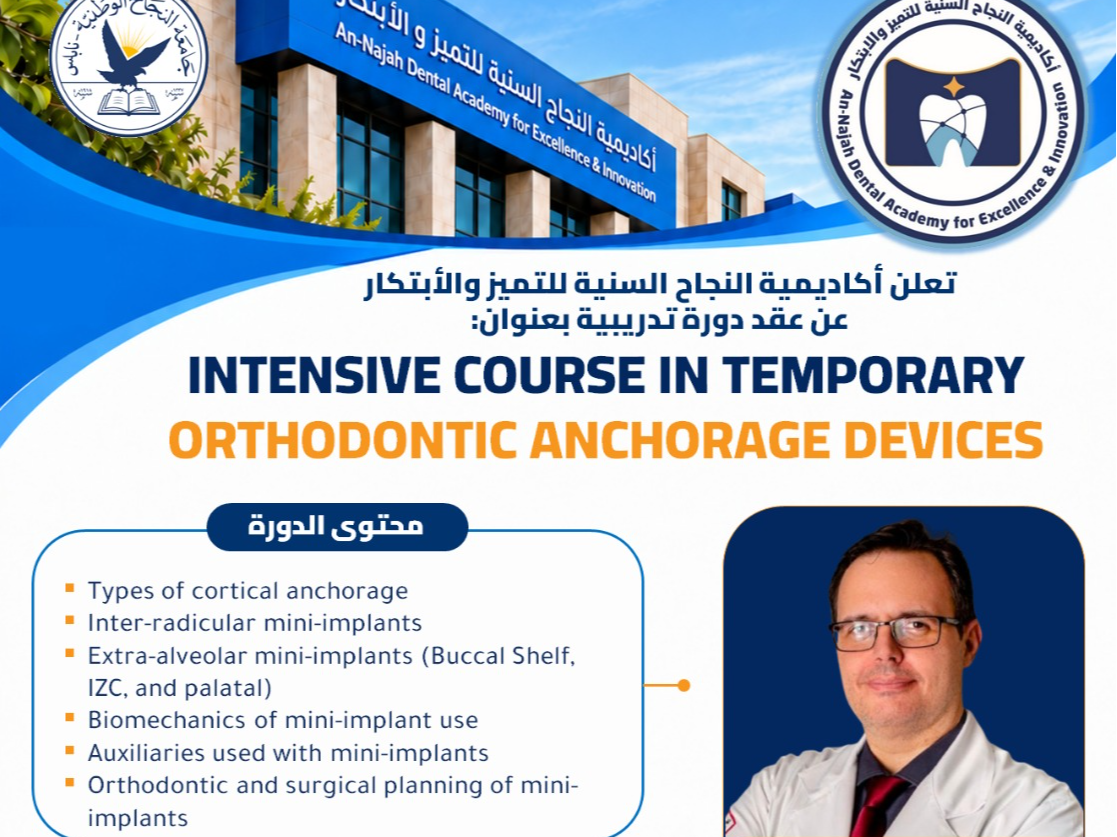
Objective: Establish a solid theoretical understanding of cortical anchorage, its variations, and clinical indications. topics covered: types of cortical anchorage and their biomechanical rationale. Inter-radicular mini-implants: indications, limitations, and anatomical considerations. Extra-alveolar mini-implants (buccal shelf, izc, and palatal): clinical scenarios and decision-making criteria. Learning approach: didactic lectures, 3d anatomical reviews, and clinical case presentations.
- Biomechanics and Orthodontic Auxiliaries
Objective: Enable participants to understand the biomechanical principles required for mini-implant-supported tooth movement and the auxiliaries needed to execute them. topics covered: Biomechanics of mini-implant use (force systems, vectors, center of resistance, and moment-to-force ratios). Auxiliaries used with mini-implants (tads, hooks, power arms, elastics, and custom setups). Translating biomechanical planning into clinical execution. learning approach: theoretical exposition supported by clinical case analysis and biomechanical diagrams.
- Digital and Surgical Planning Protocols
Objective: Train participants in the theoretical workflow of planning mini-implant placement using digital tools and surgical protocols. topics covered: Orthodontic and surgical planning concepts for mini-implants. The digital workflow: software-based 3d planning, virtual placement, and risk assessment. Anatomical safety considerations and avoiding critical structures. learning approach: lectures, software interface walkthroughs, and step-by-step digital planning demonstrations.
DAY 2: Hands-On Laboratory Immersion
Focus: Practical workshops, mannequin simulation, and execution of the clinical protocol.
- Surgical Placement in Artificial Bone
Objective: Allow participants to physically execute the surgical placement of mini-implants, transferring the digital plan to a physical model. Topics covered: Step-by-step laboratory placement of mini-implants in artificial bone blocks. Drilling protocols, achieving primary stability, and ensuring correct 3d positioning. learning approach: hands-on surgical practice using specialized mannequins, artificial bone, and guided surgical kits.
- Activation and Fabrication of Auxiliaries
Objective: Complete the full clinical workflow by having participants fabricate and activate the orthodontic auxiliaries on the placed mini-implants. Topics covered: activation of mini-implants and application of orthodontic forces. Fabrication and assembly of orthodontic auxiliaries directly on the specialized mannequins. Integration of the auxiliary with the mini-implant to achieve the planned tooth movement. Learning approach: Hands-on laboratory practice with wires, composites, and orthodontic materials, featuring real-time instructor feedback.